The 1940s doodle invading 2020s feeds
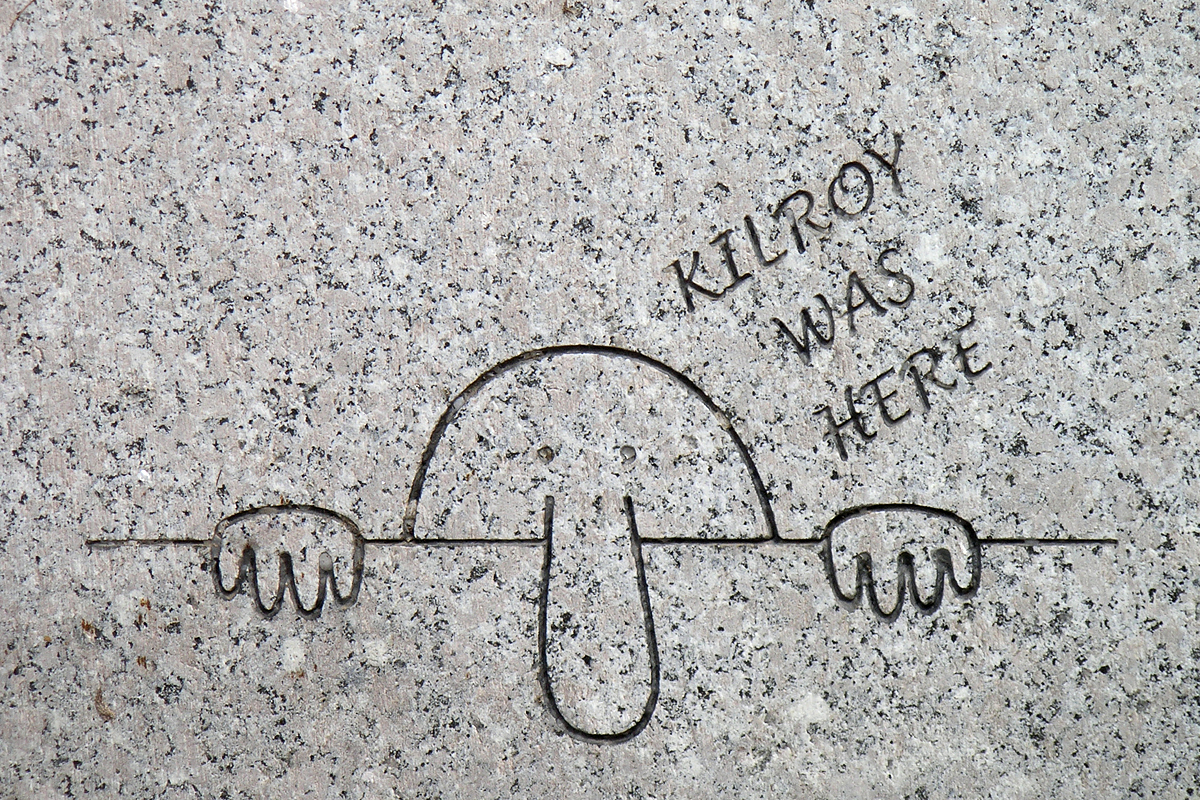
If your timeline suddenly looks like a pair of cartoon eyes peeking over a wall with a big nose and the caption “was here,” you’re not hallucinating nostalgia. The WWII graffiti meme—better known as “Kilroy was here” (and his British cousin, “Chad”)—is having a comeback. Our trend radar shows a +350% pop in interest, which is wild for a scribble that predates the ballpoint pen.

What is the WWII graffiti meme?
At its simplest, it’s a doodle of two eyes and a long nose hanging over a wall, with fingers gripping the edge—usually captioned “Kilroy was here.” In the UK, the same peeper showed up as “Chad,” often paired with a grumpy question like “Wot, no sugar?” During WWII, this sketch spread anywhere people could leave their mark: shipyards, barracks, train cars, latrines, and bomb shelters. It was the world’s most analog check-in, a proto-tag that said, “Someone like you made it here first.”
Where did it come from?
Origin stories compete like fandom theories, but the popular US tale credits a shipyard inspector named James J. Kilroy, who allegedly marked completed rivet lines with “Kilroy was here.” GIs adopted the tag, added the peeking character, and smuggled it across continents. Meanwhile, in Britain, the “Chad” figure surfaced independently in cartoons lampooning wartime shortages. By mid-war, the visuals blended into a single, unstoppable meme: one little face, infinite walls to peek over.
What matters most isn’t which pencil drew it first—it’s how fast it moved. Kilroy/Chad went viral along supply routes and troop movements long before anyone could hit Share. The meme rode on boredom, bravado, and the universal urge to say “I existed.”
Why does it still slap in 2026?
- Minimalism wins. Two eyes, a nose, a line—that’s it. It reads instantly at any size, from bathroom stall to phone screen.
- Presence is the flex. A “was here” tag is the original humblebrag. You didn’t just see the thing—you made your mark on it.
- It’s remixable. Swap the caption, tweak the wall, change the vibe. Keep the silhouette and everyone gets the joke.
- It’s anonymous, but social. No clout-chasing handle needed. The meme is the identity.
How it’s getting remixed online now
Today’s Kilroy lives in comment sections, IG stories, Discord pins, and chalk on the sidewalk outside the trendiest coffee spot. Creators drop a tiny peeking face on screenshots to say “I saw this first.” Brands are even sneaking tasteful versions into OOH posters, letting the audience “catch” the doodle like an Easter egg.
There’s also a comeback for the British flavor: “Wot, no [X]?” Swap in whatever we’re collectively out of (sleep, GPUs, serotonin, bagels). The joke lands because scarcity memes never go out of style.
Make your own: quick templates
- Classic check-in: Draw the eyes, nose, and fingers over any “edge” in your photo—doorframe, monitor bezel, chart axis—and add “was here.”
- Scarcity spin: Keep the peeker and write “Wot, no Wi‑Fi?” “Wot, no overtime?” or “Wot, no oat milk?”
- Event flex: Post a crowd shot with a tiny Kilroy in the corner. Caption: “First in, still here.”
- Watermark energy: Place a mini Kilroy on your meme drop to signal provenance without slapping a big logo.
- Comment-mode: Reply with just the doodle ASCII and a short quip. Example: (._.) nose over a line + “was here before the patch notes.”
Etiquette (because yes, even graffiti has rules)
- Keep it playful. Kilroy works best as a wink, not a dunk.
- Respect spaces IRL. Chalk over paint. Stickers over permanent markers. The internet has plenty of walls.
- Don’t launder bad takes. If your “was here” tags harassment or hate, it stops being a meme and starts being a mess.
- Credit when you remix. If you riff on an artist’s Kilroy variant, tag them in the caption.
Proof of presence is the oldest flex on the internet—we just used to carve it in actual walls.
Why the surge now?
Memes run on cycles, and nostalgia’s having a main-character moment. The “graffiti from WWII” aesthetic also dovetails with today’s lo‑fi, handwritten, zine-core design wave. It’s equal parts rebellion and relatability: anti-polish in a hyper-polished feed. Factor in a fresh crop of history TikToks and design accounts spotlighting analog culture, and you’ve got a perfect storm for a +350% spike.
Bring Kilroy to your closet
If you’re itching to wear that peeking-nose energy, turn it into your own signature piece. Spin up a custom take (classic “was here,” scarcity quips, or your handle in tiny text) with Wahup’s Meme Generator. It’s fast, comfy, and way more legal than tagging a train car. Explore now: Wahup Meme Generator.
#KilroyWasHere #MemeHistory #WWIIGraffiti #MemeCulture #WotNo #InternetLore #Wahup
Featured products
Product links
- Gildan 5000 Unisex Heavy Cotton Tee - My Best Friend Is Not Your Friend Shirt, Funny Gift for Women, Bestie Inspirational Outfit, Printify Choice
- Comfort Colors® 1717 Balls Deep In Christmas Spirit Tee, Unisex Garment-Dyed T-shirt, Funny Holiday Humor Shirt, Cute Ornament Design, Perfect Xmas Gift for Him or Her, Aesthetic Outfit for the Festive Season
- Beam Me Up This Place Sucks Gildan 18000 Sweatshirt, Funny Alien Crewneck, Retro Sci-Fi Hoodie Gift for Introverts, Printify Choice
- ✨Gildan 18000 Cute Pug Coffee Sweatshirt for Women✨ Cozy Unisex Gift, Trendy Animal Coffee Lover Shirt, Printify Choice
- Comfort Colors T-Shirt 1717 Take me to the Boy Aquarium, Hockey Fan Gift, Bookish Hockey Romance, Gift for Reader, Hockey, Ice Hockey Player Gift S1 Tee
- Odysseus Sweatshirt for Theater Lovers: Gildan 18000 Cozy Unisex Crewneck, Perfect Homer Odyssey Gift, Printify Choice for Mythology Fans
- Gildan T-Shirt 5000 canada curling meme S1 Tee
- Vintage Santa Sweatshirt Gildan 18000, Retro Christmas Crewneck, Funny Holiday Gift, Cozy Unisex Aesthetic Pullover, Printify Choice
- Comfort Colors T-Shirt 1717 Hockey, Classy Until Puck Drop Hockey, Hockey Women Gifts, Hockey Game Day, Hockey Mom Gift, Hockey Lover S2 Tee